news
How Circular Startups Are Changing the Future of Food and Packaging From research
ahoy
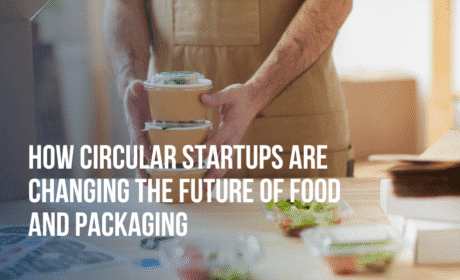
Imagine a food industry where leftovers are not wasted but reused as valuable resources. Where technology tracks food waste to prevent losses, and packaging is designed to be reused instead of discarded. This vision is no longer just an idea of the future—it is already being realized by innovative circular startups.
Startups Taking the Lead in Reducing Food Waste
Startups are emerging as key drivers of change in the agri-food sector, accelerating the shift toward a circular economy. However, until recently, there was no clear framework explaining how these startups contribute to sustainability and where they fit within the larger food system.
A new research study addressed this gap by analyzing 79 agri-food startups focused on circular economy solutions. The study identified three main types of startups, each playing a unique role in reducing food waste and improving sustainability.
Three Types of Circular Economy Startups
The research categorizes circular startups into the following groups:
Biotech-driven sustainable producers
These startups use biotechnology to transform food waste into valuable resources. Their innovations demonstrate how the food supply chain can be closed more efficiently and sustainably.
Digital circular economy enablers
By using apps, sensors, and digital platforms, these startups track where food waste occurs and help optimize processes. They connect farmers, retailers, and consumers, showing how data-driven solutions can significantly support sustainability efforts.
Circular packaging pioneers
Focusing on reusable, returnable, and recycled packaging, these startups aim to make packaging an integral part of the circular system rather than a source of waste ending up in landfills.
“This typology serves as a compass for entrepreneurs, investors, and policymakers. It highlights where the greatest potential lies and which strategies can help circular startups become a driving force of a more resilient and sustainable food system,” explains Jan Kubálek, researcher at the Prague University of Economics and Business (VŠE) and co-author of the study.
Redefining the Food Industry
The study reveals that while startups adopt different tools and strategies, they all share one key strength: the ability to innovate without being constrained by long-established processes.
“Large companies often struggle to change traditional systems. Startups, on the other hand, can design circular business models from the very beginning. This allows them to be more flexible, bold, and innovative—often reshaping the rules of the industry,” adds Michal Kuděj, researcher at VŠE and co-author of the study.
With their creativity and adaptability, circular startups are proving to be essential players in building a more sustainable, efficient, and future-ready food industry.
Contacts
Kerala
First Floor, Safeena Mansion,Mahatma Gandhi Rd, opposite Kanoos Theater, Ravipuram, Perumanoor, Kochi, Ernakulam, Kerala , India , 682016
Tamil Nadu
Door No: 702, Second Floor, Esteem Complex, Opposite Gknm Hospital,Avinashi Road, Coimbatore, Tamil Nadu , India , 641018
+91 894 00 55 333

Powered by
ahoy cestovani ventures pvt.ltd
GST: 32AAZCA9442L1ZZ
CIN:U85500KL2024PTC085474
designed & developed by